




Moissanite vs. Diamond: What You Need to Know
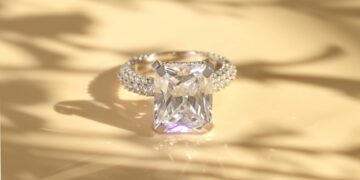
Imagine a diamond. Now imagine something that looks almost identical, sparkles even brighter, and costs a fraction of the price. This isn’t a fairy tale. it’s moissanite. But is moissanite a real diamond? The short answer is no, it’s not a diamond at all. However, this distinction doesn’t diminish its appeal as a stunning and increasingly popular gemstone for jewelry, especially engagement rings.
Last updated: April 22, 2026
For decades, diamonds have reigned supreme as the ultimate symbol of love and commitment. Yet, as consumer awareness grows regarding ethical sourcing, environmental impact, and cost-effectiveness, alternatives like moissanite are stepping into the spotlight. We’ll break down exactly what moissanite is, how it compares to diamonds, and whether it deserves a place in your jewelry box.
What Exactly is Moissanite?
Moissanite is a naturally occurring mineral, silicon carbide (SiC), discovered in 1893 by French chemist Henri Moissan when he examined samples from a meteor crater in Arizona. While naturally occurring moissanite is incredibly rare, the moissanite used in jewelry today is laboratory-created. This controlled environment allows for the production of large, high-quality stones that possess exceptional brilliance and fire.
The creation process involves advanced technology to synthesize silicon carbide crystals. The first commercially viable synthetic moissanite was developed in the late 1990s by a company called C3 (now Charles &. Colvard], revolutionizing the gemstone market. It’s important to understand that moissanite is its own unique gemstone, not a diamond simulant in the same vein as cubic zirconia — which is a manufactured mineral compound.
The Sparkle Showdown: Moissanite vs. Diamond
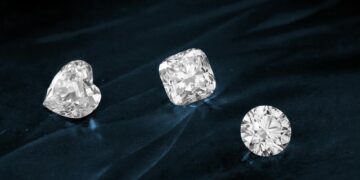
When you look at a moissanite stone, the visual similarity to a diamond is striking. Both are colorless (or near-colorless) and possess exceptional brilliance. However, there are key differences in their optical properties that give moissanite its signature look.
- Brilliance: Moissanite actually has a higher refractive index (RI) than diamond. Diamond’s RI is about 2.42, while moissanite’s is around 2.65 to 2.69. This higher RI means moissanite bends light more, resulting in more sparkle.
- Fire: This is where moissanite really shines—literally. Moissanite exhibits more ‘fire,’ which is the dispersion of light into rainbow colors. According to the Gemological Institute of America (GIA), moissanite has a higher dispersion value than diamond, leading to a more pronounced rainbow effect. Some people love this, while others find it can look a bit too flashy, especially in larger stones.
- Hardness and Durability: On the Mohs scale of hardness, diamonds rank a perfect 10. Moissanite comes in at a very respectable 9.25. This makes it incredibly durable and suitable for everyday wear, second only to diamond. For context, mindat.org notes that sapphire and ruby are 9 on the Mohs scale.
A key differentiator often cited is the ‘disco ball’ effect. While diamonds reflect white light back as brilliance, moissanite’s higher dispersion causes it to split light into more spectral colors, creating that vibrant rainbow flash. This isn’t necessarily a bad thing. it’s just a characteristic of the stone.
Is Moissanite a Real Diamond? The Chemical Difference
Here’s the core of the question: is moissanite a real diamond? Chemically, the answer is a definitive no. Diamonds are pure carbon, arranged in a crystal lattice structure. This structure is what gives diamonds their unparalleled hardness and unique optical properties.
Moissanite, But — is silicon carbide. This difference in chemical composition means they’re entirely separate minerals, despite their similar appearance. Think of it like comparing gold to brass. Both are yellow metals, but they’re different substances with different properties and values.
The Ethical and Environmental Angle
The rise in popularity of moissanite is tied to concerns about the ethical sourcing of diamonds. While the Kimberley Process aims to prevent conflict diamonds from entering the market, its effectiveness has been debated. According to a 2021 report by Reuters, the process still faces scrutiny regarding its ability to fully eradicate conflict diamonds.
Lab-created moissanite offers a conflict-free alternative. Its production is controlled, transparent, and doesn’t involve the mining practices associated with natural diamonds — which can have significant environmental impacts, including habitat destruction and water usage. This ethical advantage is a major selling point for many consumers.
Cost-Effectiveness: A Major Draw
Let’s talk numbers. The price difference between a diamond and a comparable moissanite stone is substantial. A 1-carat, high-quality diamond can cost anywhere from $5,000 to $10,000 or more, depending on the 4Cs (cut, color, clarity, and carat weight). A 1-carat moissanite, But — might cost between $300 and $800.
This significant cost savings allows individuals to purchase larger stones, more elaborate settings, or simply save money for other financial goals without compromising on the beauty and sparkle of their jewelry. For instance, a couple might opt for a 2-carat moissanite center stone — which would visually rival a 1-carat diamond, for a fraction of the price.
Practical Tips for Choosing Moissanite
If you’re considering moissanite, here are some practical tips to help you make an informed decision:
- Understand the Fire: Be aware of moissanite’s enhanced fire. If you prefer a more subtle sparkle, look for lower grades of moissanite or consider diamond simulants that mimic diamond’s fire more closely. However, for most, the enhanced fire is part of its charm.
- Look for Certifications: Reputable moissanite suppliers will provide grading reports or certificates of authenticity, similar to diamonds. Charles &. Colvard, for example, has its own grading system and often includes its hallmark.
- Consider the Setting: Because moissanite is so durable, it works well in almost any jewelry setting. However, its tendency to show rainbow flashes might influence your choice of metal or side stones. White gold or platinum settings often complement its sparkle best.
- Shop Reputable Retailers: Stick to well-known jewelers or specialized moissanite retailers. This ensures you’re getting a genuine product and not an imitation moissanite or a lower-quality simulant passed off as the real thing. Brands like Brilliant Earth and James Allen offer moissanite options.
- Know the Carat Equivalent: Moissanite is measured by its millimeter size, not by carat weight in the same way diamonds are, due to its lower density. Jewelers often use ‘diamond equivalent carat weight’ to help customers visualize size. A 6.5mm moissanite stone, for instance, is roughly equivalent to a 1-carat diamond in size.
Is Moissanite a Real Diamond? The Verdict
So, to circle back: is moissanite a real diamond? No, it’s not. It’s a distinct gemstone with its own unique characteristics, benefits, and beauty. It’s a lab-created marvel that offers incredible sparkle, exceptional durability, ethical sourcing, and remarkable cost-effectiveness.
Whether moissanite is the ‘right’ choice depends entirely on your personal preferences, budget, and values. If you’re seeking the ultimate symbol of luxury with a known history and a specific type of sparkle, a natural diamond might be your preference. But if you desire a stone that’s visually stunning, ethically produced, incredibly durable, and budget-friendly, moissanite is an outstanding option that truly holds its own.
Frequently Asked Questions
Is moissanite the same as cubic zirconia?
No, moissanite and cubic zirconia are different materials. Cubic zirconia (CZ) is a manufactured mineral compound (zirconium dioxide), while moissanite is silicon carbide. Moissanite is harder and more durable than CZ, ranking 9.25 on the Mohs scale compared to CZ’s 8-8.5. Moissanite also exhibits more fire and brilliance.
Will moissanite pass a diamond tester?
Standard diamond testers — which measure thermal conductivity, will often identify moissanite as a diamond because moissanite also conducts heat well. However, specialized testers that measure electrical conductivity can distinguish between the two, as moissanite is electrically conductive while diamond isn’t. Many jewelers use these advanced testers.
How do I care for my moissanite jewelry?
Caring for moissanite is simple. Regular cleaning with a soft brush, warm water, and mild dish soap is usually sufficient to restore its sparkle. Avoid harsh chemicals and ultrasonic cleaners, as these can sometimes damage the setting or affect the stone’s finish over time. It’s best to remove jewelry before engaging in strenuous activities or using cleaning products.
Is moissanite considered a precious gemstone?
While diamonds, rubies, sapphires, and emeralds are traditionally considered precious gemstones, moissanite is typically classified as a semi-precious gemstone. However, its desirability, durability, and beauty rival those of many precious stones, making it a highly valued option in the jewelry market.
Can moissanite be a good investment?
Moissanite is generally not considered a significant investment in the same way that high-quality natural diamonds might be. Its value lies in its beauty, durability, and affordability rather than its potential for resale appreciation. It’s best viewed as a purchase for personal enjoyment and symbolic meaning, not as a financial asset.